Academic
COURSES
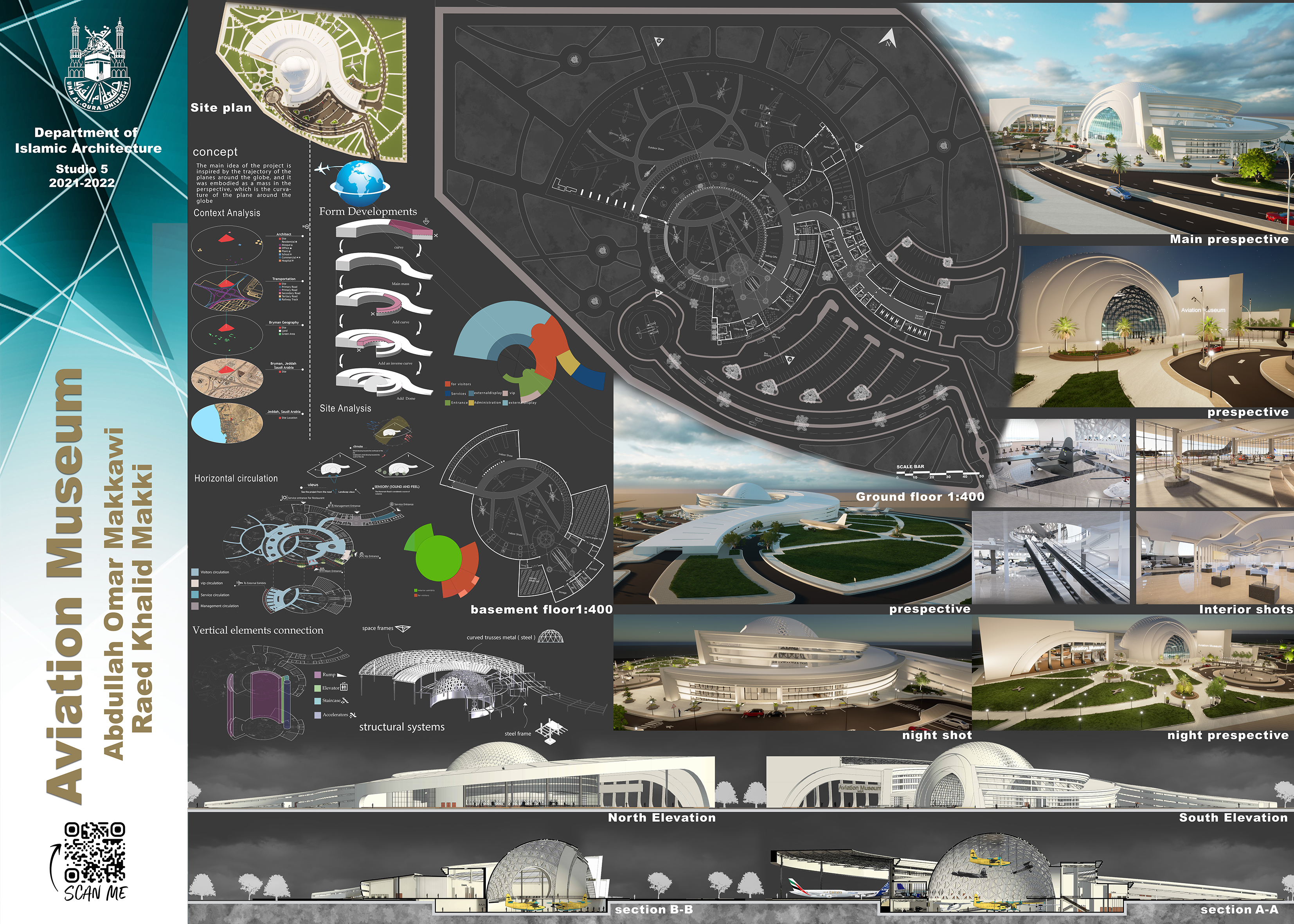
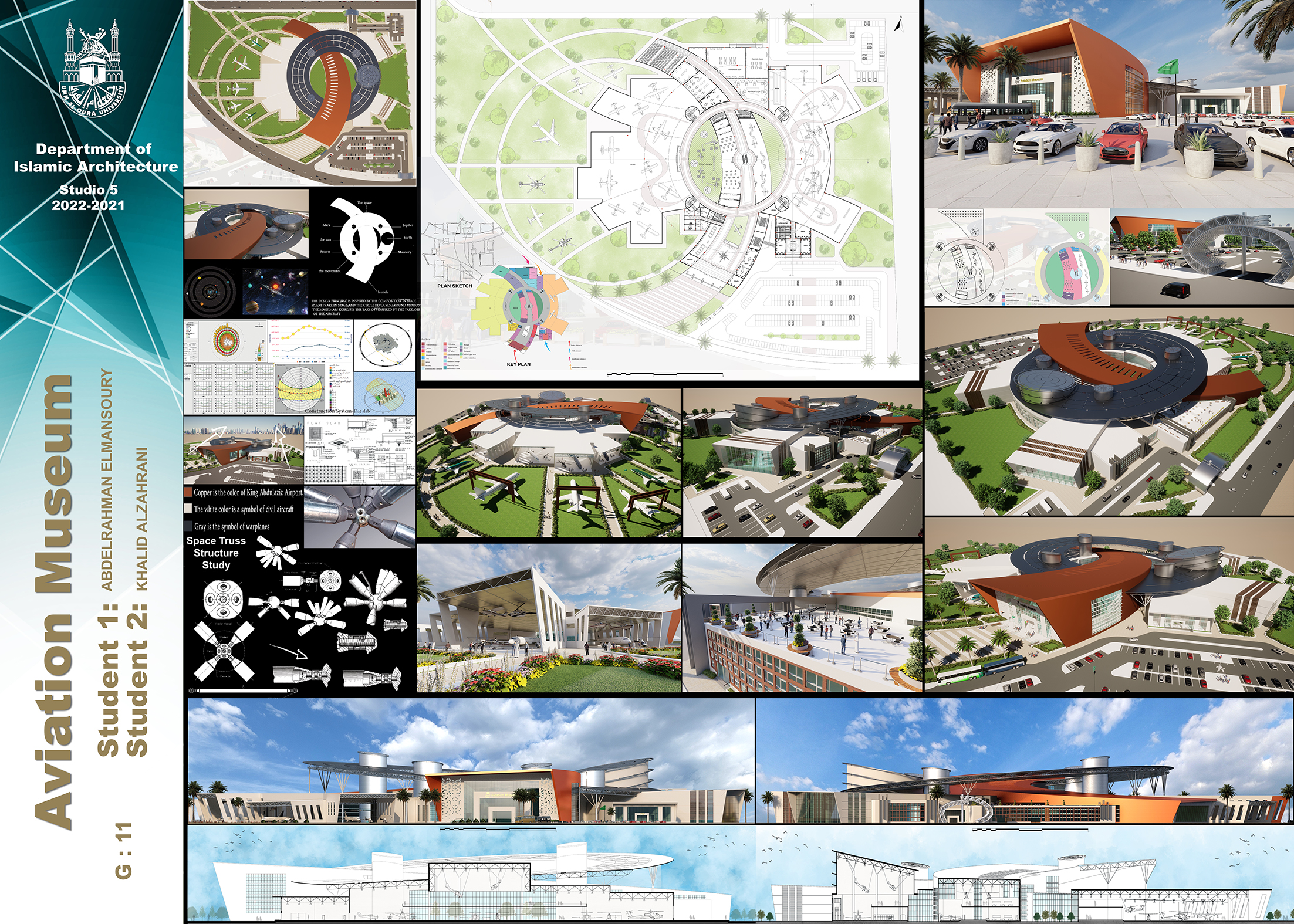
DESIGN STUDIO 5 (UG): The main focus of this course is to acquaint the student with the applications of different structural systems. Hence, the student can select the appropriate construction materials & proper structure systems when designing different architectural projects.
2021 Project: Aviation Museum at Jeddah.
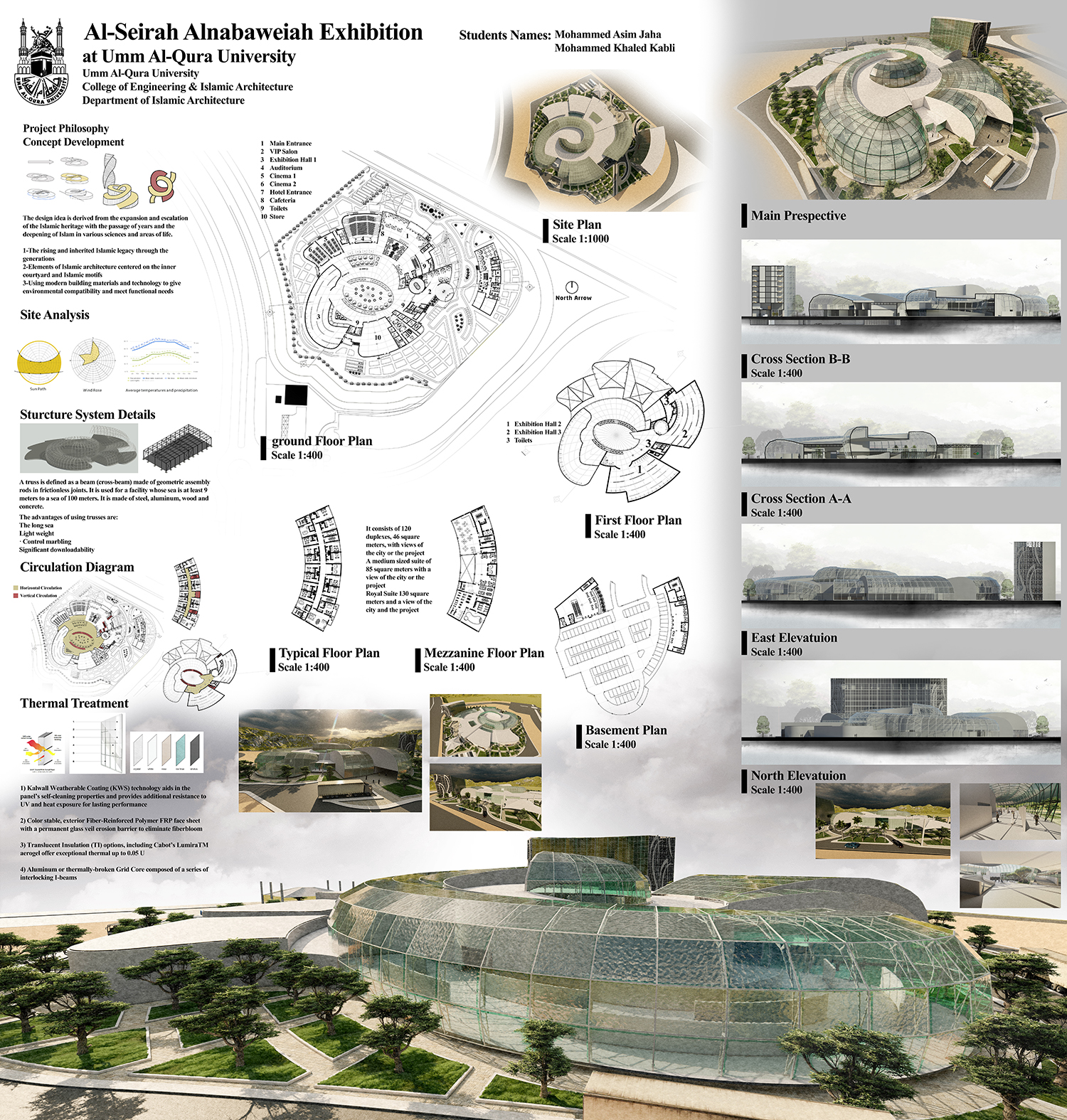
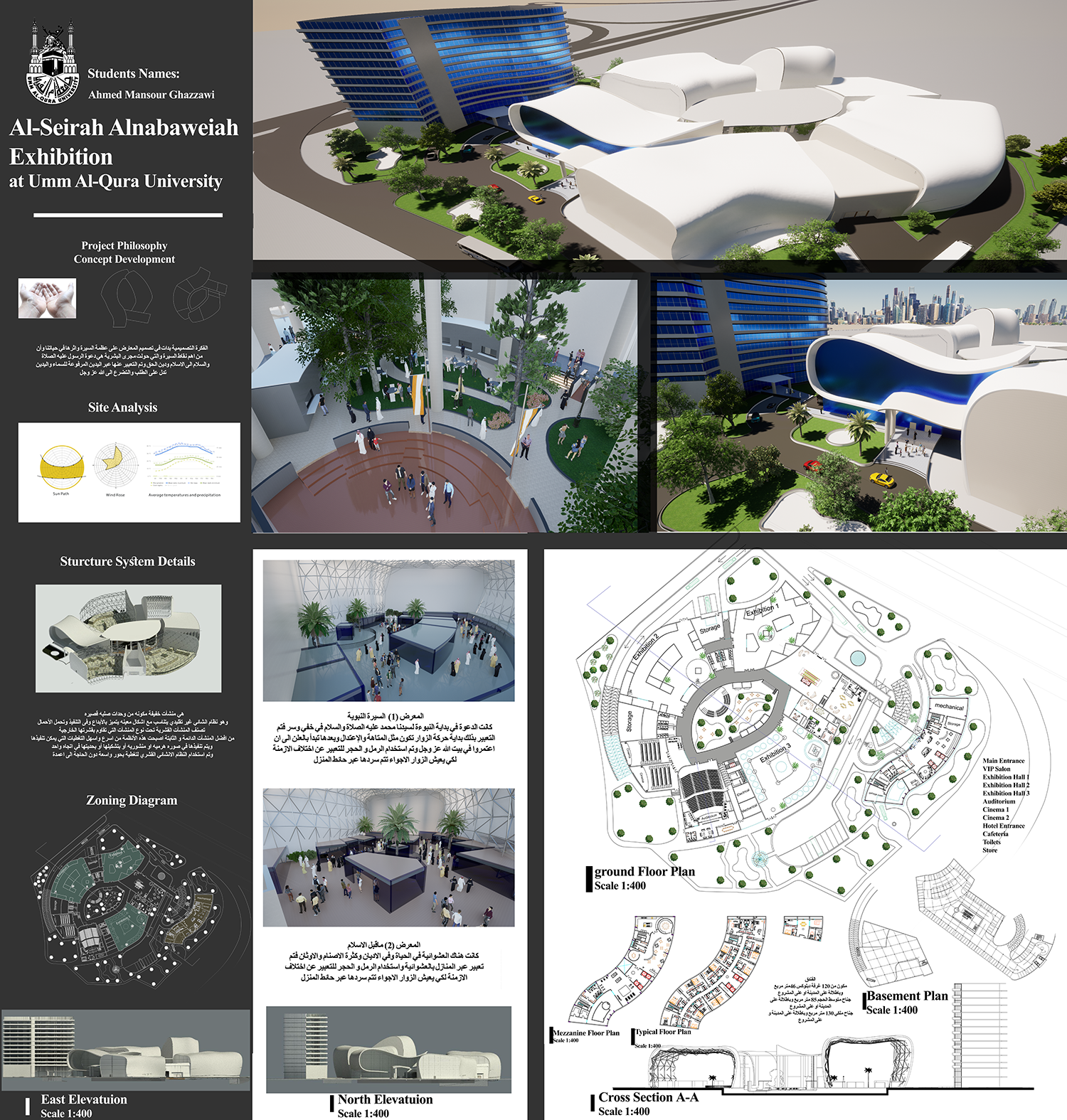
2020 Project: Prophet Muhammad History Museum:
DESIGN STUDIO 6 (UG): This course focuses on understanding environmental sustainability as an essential part of design operations. This is expected to be accomplished by familiarizing the student with adequate sustainability knowledge, so the student can select the appropriate sustainable treatments when designing in different climate zones.
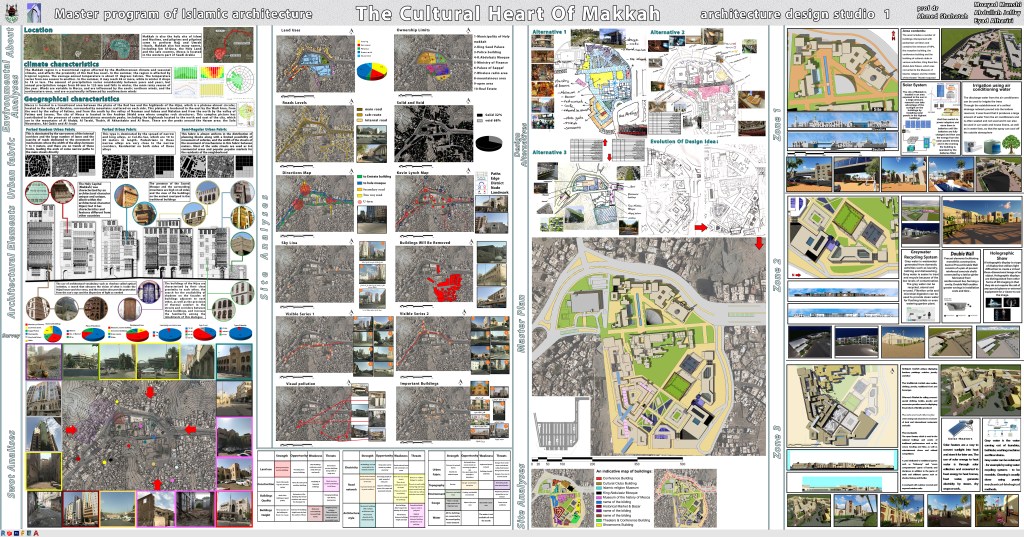
Design Studio I
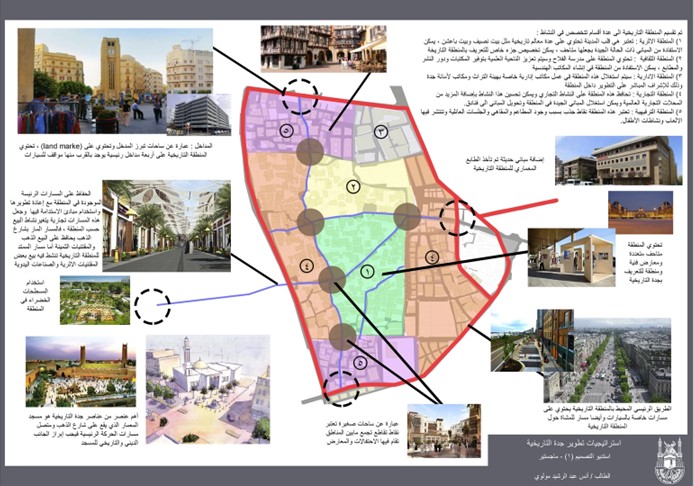
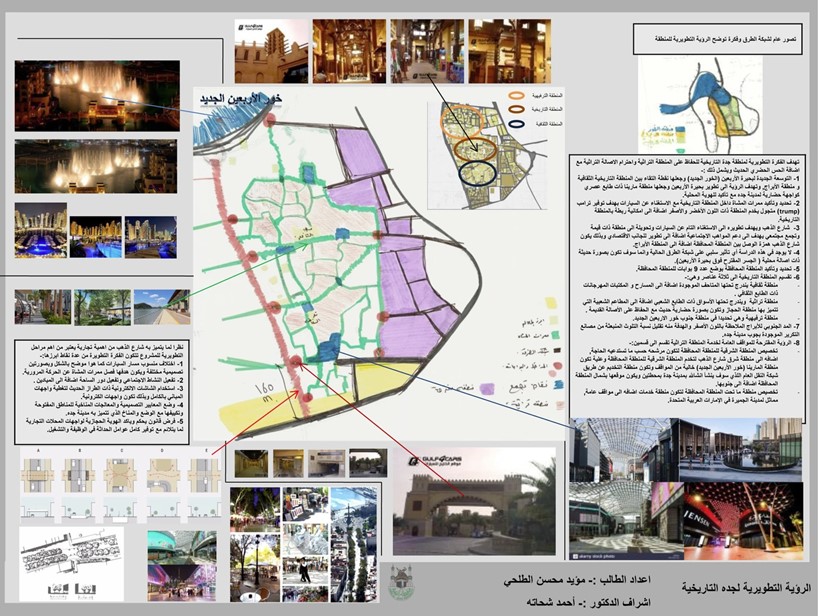
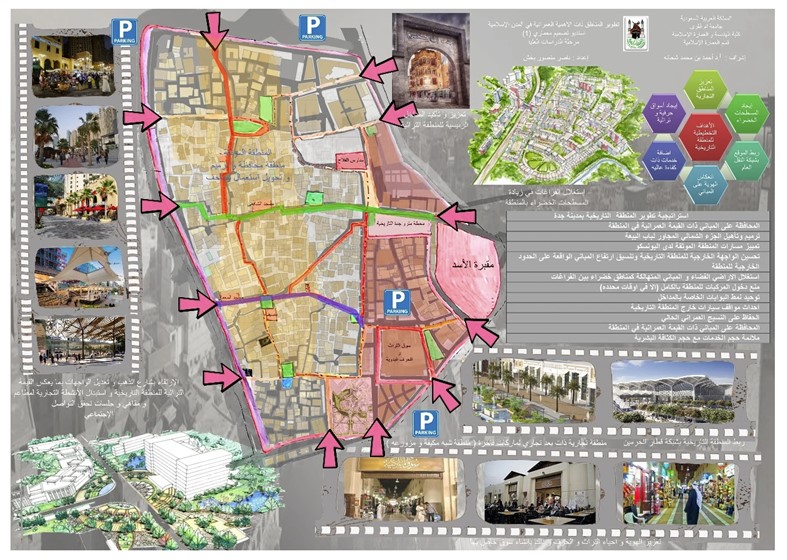
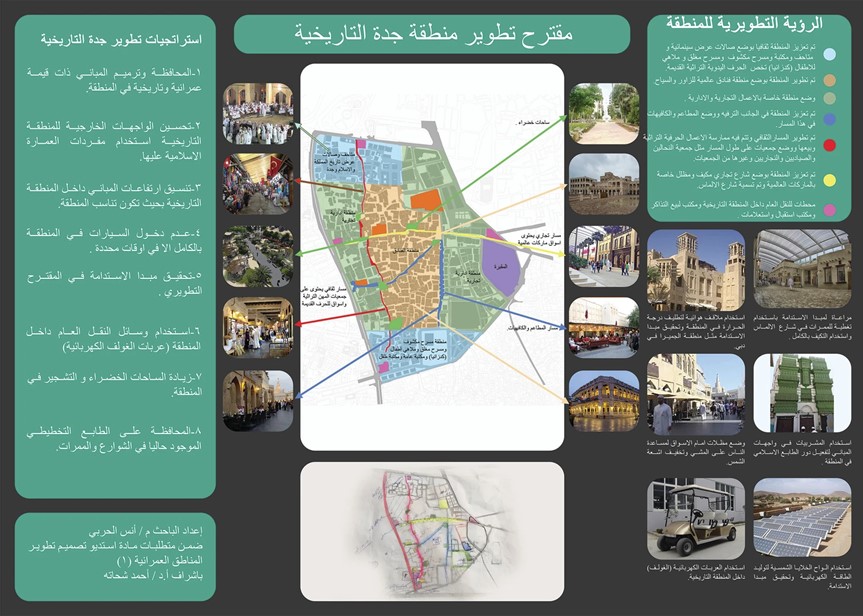
Development of Islamic Cities’ Urban Centers (PG): Through this course, each group of students study one of the historical Islamic cities, analyze its urban, social, and cultural problems and make a comprehensive urban design proposal.
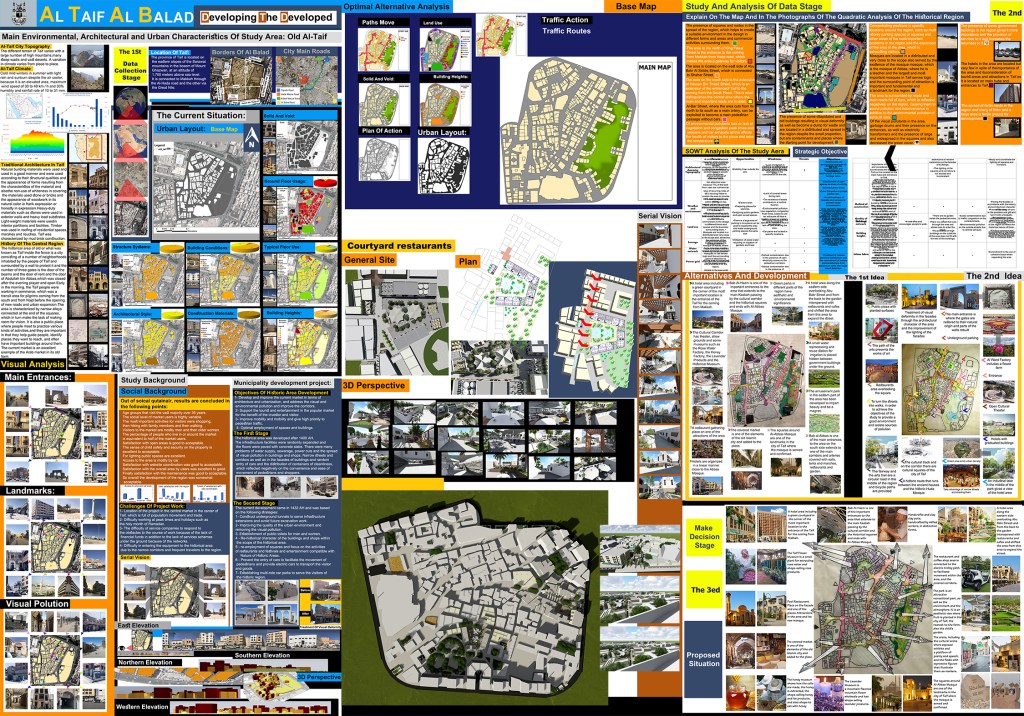
ADVANCED COMPUTER APPLICATIONS (UG): This course aims to build the students’ skills in utilizing programming and macros to generate 2D & 3D forms and ideas. The course also aims to expand the students’ notion to understand and experience parametric and generative designs. Moreover, the course aims to develop the students’ animation skills and digital fabrication techniques.
COMPUTER APPLICATIONS II (UG): This course builds students’ skills in using computer technologies to develop and present architectural designs. Through this course, students would use computer software to create three-dimensional architectural models and present them in perspectives and animations. Moreover, the course teaches students to produce integrated architectural design documents.
2020 COURSES



Project Web site link:
https://elsherouk.wixsite.com/design-studio
2019 COURSES
2018 COURSES
2017 COURSES
2016 COURSES
Design Studio 1
Design Studio II
Islamic Cities Built Environment
2015 COURSES
Design Studio 6 (UG): Implementation of principles of urban theories in a complex urban and architectural design. Utilizing analytical and illustrative skills for preparing the project report. The use of 2D & 3D, computer software programs to present their ideas. The frequent use of librrary and web-based references is encouraged.
Building Construction (UG): In this course, fundamentals of building construction are introduced to the students; Project delivery system & Associated professions. Students would be familiarized with different building structures’ types, focusing on traditional construction methods and materials such as load bearing, skeleton structures and commonly used building materials (In-situ and Pre-fabricated). The course also covers construction process, internal finishings, as well as the construction of main building elements including foundations, stairs, doors and windows. Different building insulation & materials would be presented, explained & discussed.
Computational Tools in Urban Design (PG): This course offers students an overview of the importance of computer applications to the urban design practice. Through this course, students will acquire digital representation skills and techniques throughout the urban design process from site analysis, conceptual development, alternatives analysis, and design development and presentation. Hands on dealing with real-world design applications are the teaching mode of this course.
Social and Cultural Issues in Urban Design (PG): The aim of the course is to provide a deeper understanding of the social and cultural issues in societies and their impact on urban design. Issues of culture, ethnicity, values, habits, memories etc. are all examples of socio-cultural issues played out in everyday life. This course presents theoretical and empirical studies focused on social and cultural dimensions of everyday life, analyze and discuss how social and cultural issues are visible or not in urban life, reflect over our own experiences of socio-cultural issues, e.g. as students, professionals, citizens, cultural “insiders” or “outsiders”, practice cultural analysis methods for collecting data and practice methods communicate/present them in a comprehensive way.
 Ashehata